For a federal agency or military organization, the resources, personnel and expertise available to defend against cyber threats can look very different from what is available to a rural hospital, school district, local government or small business.
That gap is one of the ideas behind a new article from Eric Toler, Executive Director of the Georgia Cyber Center at Augusta University.
Published in The Cyber Defense Review, Toler’s article, “Rethinking Higher Education for Whole-of-Society Cybersecurity: The Georgia Cyber Center Model,” looks at what universities can do beyond preparing students for cybersecurity careers.
For Toler, the issue became more apparent after moving from federal cybersecurity work to the state level.
Toler spent 28 years in the U.S. Army, including assignments with Army Cyber Command, U.S. Cyber Command and the National Security Agency. He also served as Commander of NSA Georgia. After joining Augusta University and taking on leadership of the Georgia Cyber Center, he began seeing cybersecurity challenges from a different perspective.
The threats were not limited to federal networks or large organizations.
They were showing up in communities that often had far fewer resources to respond.
What does that mean for higher education?
Toler argues that universities are in a unique position to help close some of those gaps.
Students need an education, but they also need opportunities to work with real problems. Communities need cybersecurity support, but many organizations cannot afford the same services available to larger companies or government agencies.
That creates an opportunity to connect the two.
The Georgia Cyber Center provides several examples of what that can look like.
Starting before students enter college
Toler points to K-12 education as an important part of building the cybersecurity workforce.
The Georgia Cyber Center has hosted large-scale CyberPatriot camps for middle and high school students, giving students the chance to work through cybersecurity challenges while exposing them to careers they may not have considered.
The camps also help reach students who may not otherwise have access to cybersecurity programs or experiences, particularly in rural and underserved communities.
Giving college students real experience
That hands-on approach continues into higher education.
Augusta University offers both technical and policy-focused cybersecurity programs, while the Georgia Cyber Range gives students opportunities to participate in training, exercises and applied research.
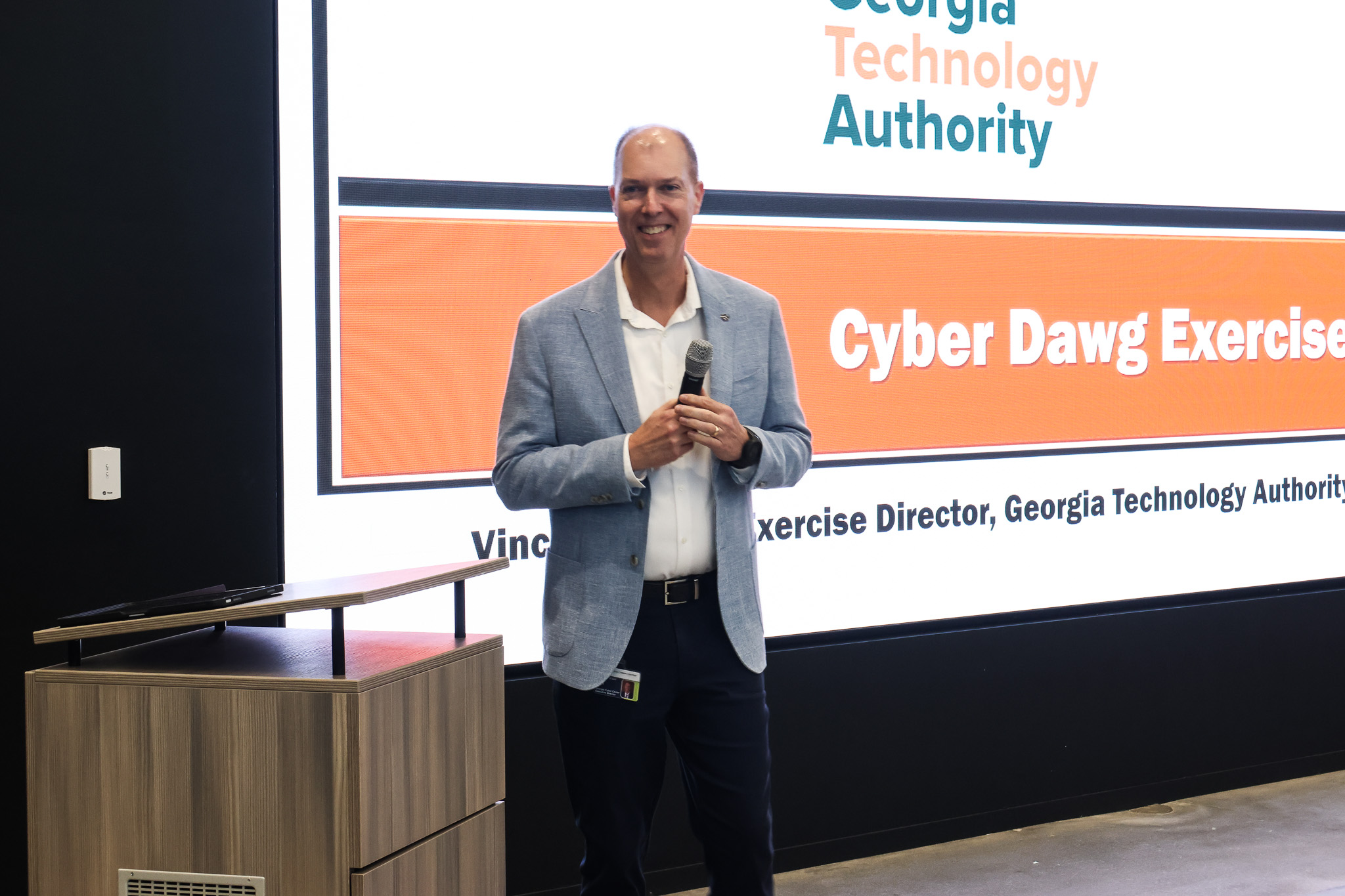
Toler also highlights Cyber Dawg, a large-scale cyber exercise that brings together state and local government, military organizations and other partners to practice responding to complex cyber incidents.
The idea is simple: students learn more when they can apply what they are learning to problems that look like the ones they may face after graduation.
Putting students to work in their own communities
One of the most distinctive examples in the article is the Georgia Cyber Center’s Cyber Resiliency Center.
The program uses a student-supported workforce to provide cybersecurity services to organizations that may not have the resources to hire a traditional cybersecurity team.
That includes rural hospitals, local governments and K-12 school districts.
The model is particularly important for rural communities. Toler points to a partnership with the Georgia Department of Community Health that will provide cybersecurity services to 93 rural hospitals over several years.
For the students involved, the work provides experience they cannot get from a textbook. For the organizations receiving the services, it creates access to cybersecurity support that may otherwise be out of reach.
A different way to think about cybersecurity education
That connection between education and real-world needs is central to Toler’s argument.
Higher education has traditionally been responsible for teaching students and conducting research. Toler argues that universities can also become active participants in protecting the communities around them.
The Georgia Cyber Center was built around that idea: bringing government, academia and private industry into the same environment and creating opportunities to work together.
The article makes the case that this approach does not have to stop in Georgia. Toler suggests the model could be adapted by universities in other states, creating more opportunities for students while helping communities address cybersecurity challenges they may not be equipped to handle on their own.
As cyber threats continue to change, the need for people who understand both the theory and the practical side of cybersecurity will only grow.
And sometimes the best place to develop those skills is by solving a real problem for the community next door.
Read the full article
Read “Rethinking Higher Education for Whole-of-Society Cybersecurity: The Georgia Cyber Center Model” by Eric Toler in The Cyber Defense Review.
Recent Posts